

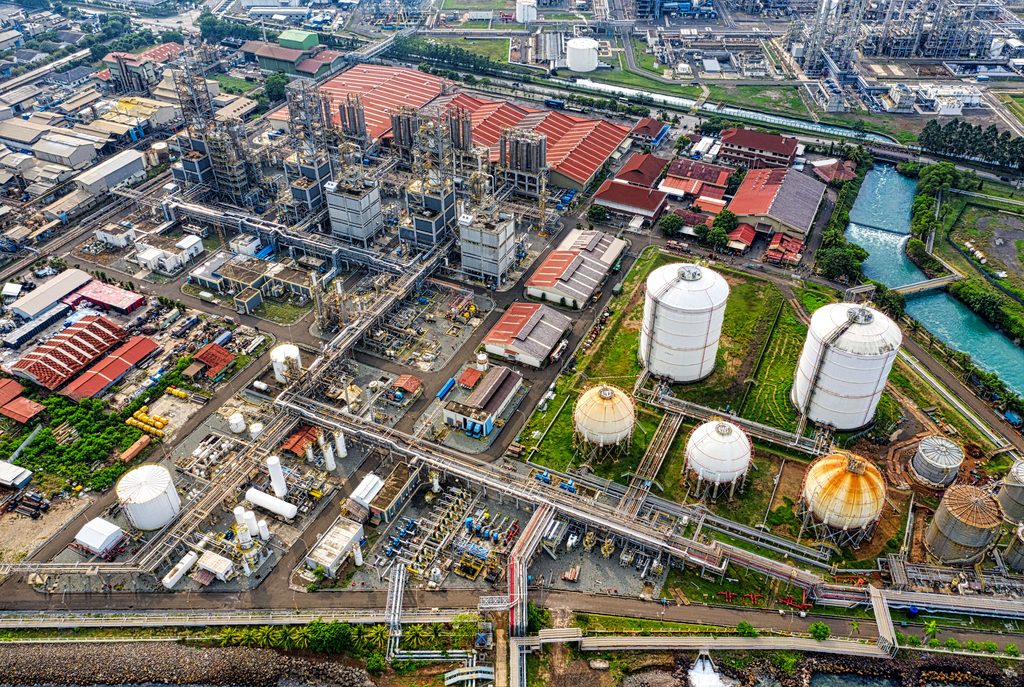
Ever feel like your manufacturing plant has top-tier machinery, experienced workers, reliable suppliers, and strong market demand, yet frequent breakdowns, low productivity, delayed payments, workplace friction, or unexpected expenses continue to eat into your profits?
You’re not alone.
Running a factory or manufacturing unit is a complex operation. Every component of the business needs to work together — machinery, manpower, raw materials, electricity, production lines, storage, management, logistics, and finances.
Even a small disruption in one area can create a chain reaction throughout the entire operation.
While technical maintenance, workforce management, quality control, and financial planning are essential for every industrial unit, many business owners also consider the spatial arrangement of their factory through the traditional principles of Industrial Vastu.
According to Vastu Shastra, the direction and placement of different elements within an industrial space can influence the overall balance and functioning of the premises.
A factory may have excellent infrastructure and advanced machinery, but if its major operational elements are placed in directions considered unsuitable according to traditional Vastu principles, business owners may choose to evaluate whether changes could create a more harmonious working environment.
Why Industrial Vastu Matters for Manufacturing Units
A factory is very different from a residential property.
Industrial spaces involve heavy machinery, high-voltage electrical systems, boilers, furnaces, raw materials, finished goods, storage areas, employee movement, loading and unloading zones, and continuous production activity.
Because of this, Industrial Vastu focuses specifically on the relationship between these elements and their directional placement.
A comprehensive industrial Vastu assessment can examine:
Heavy Machinery Placement — Evaluating the placement of heavy production equipment and machinery, with particular attention to the South-West zone traditionally associated with stability and strength.
Electrical Equipment — Reviewing the location of transformers, generators, electrical panels, and other power-related equipment in relation to the traditional fire element and South-East direction.
Boilers and Furnaces — Assessing the placement of boilers, furnaces, heating systems, and other fire-intensive equipment, traditionally associated with the South-East zone.
Raw Material Storage — Examining where raw materials are stored and how their movement through the factory interacts with production areas.
Finished Goods — Reviewing the placement and movement of finished products to support an organized and efficient factory layout.
Production Flow — Studying the movement of materials, workers, machinery, and products throughout the manufacturing process.
Office and Management Areas — Evaluating administrative and managerial spaces in relation to their directional placement and functional purpose.
Entrance and Exit — Assessing the primary entrance, loading areas, gates, and movement of vehicles according to traditional Vastu principles.
Heavy Machinery and Operational Stability
Machinery is the heart of a manufacturing unit.
When machines are frequently breaking down, production schedules are disrupted, maintenance costs increase, delivery timelines are affected, and customer relationships can suffer.
Industrial Vastu traditionally recommends placing heavy machinery toward the South-West portion of the factory, where the energy is considered more stable and grounded.
The objective is to create a layout where heavy equipment is positioned in areas traditionally associated with stability while maintaining practical requirements such as accessibility, safety, maintenance, ventilation, and production efficiency.
The South-East: The Fire and Power Zone
Electricity and heat are fundamental to most manufacturing operations.
Transformers, boilers, furnaces, generators, electrical equipment, and other heat-producing systems are traditionally associated with the fire element and the South-East direction in Vastu Shastra.
A Vastu assessment can examine whether these important components are appropriately positioned within the factory layout and whether potential directional imbalances exist.
The goal is to create greater harmony between the factory’s physical infrastructure and traditional Vastu principles without compromising essential engineering, safety, or operational requirements.
Improving the Flow of Production
A successful factory depends on movement.
Raw materials need to enter efficiently. Production needs to happen without unnecessary bottlenecks. Finished goods need to move smoothly into storage and eventually toward dispatch.
When the layout creates unnecessary obstacles, the result can be wasted time, excessive movement, material handling difficulties, and reduced operational efficiency.
Industrial Vastu evaluates the overall spatial arrangement and can provide traditional recommendations regarding the placement of production areas, storage zones, machinery, entrances, offices, and other important sections.
Addressing Workplace Challenges
Factory performance isn’t only about machines.
Employees, supervisors, managers, vendors, and customers all interact with the physical environment.
Business owners sometimes seek Vastu consultation when they experience recurring workplace conflicts, employee dissatisfaction, communication difficulties, unexplained operational delays, or a general sense that the factory isn’t functioning as smoothly as expected.
A traditional Vastu assessment can provide another perspective on the spatial arrangement of the workplace and identify areas that may benefit from correction or balancing measures.
From Production Efficiency to Financial Stability
The ultimate goal of every manufacturing business is sustainable growth.
Higher production, reduced wastage, consistent quality, timely deliveries, controlled expenses, and healthy cash flow all contribute to profitability.
Industrial Vastu does not replace sound business strategy, engineering, maintenance, workforce management, or financial planning. Instead, it offers a traditional spatial perspective that business owners may consider alongside these practical factors.
By evaluating your factory’s directional layout before making major changes, you can identify areas that may require attention and explore suitable Vastu-based recommendations.
Your Factory. Your Production. Your Growth.
Whether you operate a small manufacturing unit, a large industrial plant, a warehouse, a processing facility, or a production center, the physical layout of your premises plays an important role in how your operations function.
A personalized Industrial Vastu audit can examine your factory’s orientation, machinery placement, electrical zones, production areas, storage, entrances, offices, and overall spatial arrangement.
Instead of simply reacting to recurring operational problems, take a proactive approach and evaluate whether your factory’s layout is aligned with traditional Vastu principles.
Ready to Create a More Balanced Industrial Environment?
Your machinery represents your investment. Your factory represents your business. Your production represents your growth.
Don’t overlook the environment in which your entire operation functions.
Book your specialized Industrial Vastu audit with us today and gain a detailed understanding of your factory’s directional layout, machinery placement, fire and electrical zones, production flow, storage areas, and other important Vastu considerations.
Create a workplace designed not only for machines and production, but for stability, efficiency, growth, and long-term business success.
Take the first step toward a more harmonious factory environment and a stronger foundation for your business’s future.